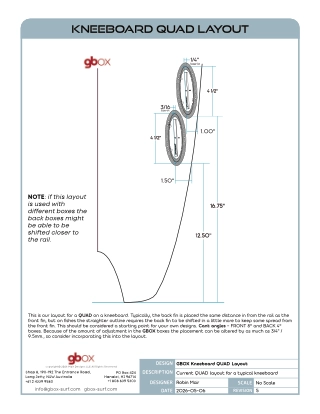
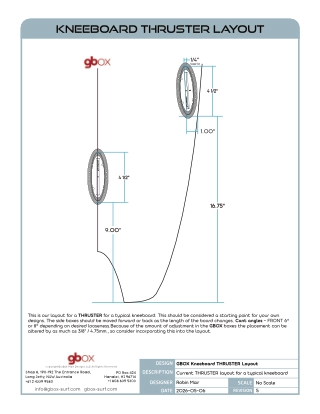
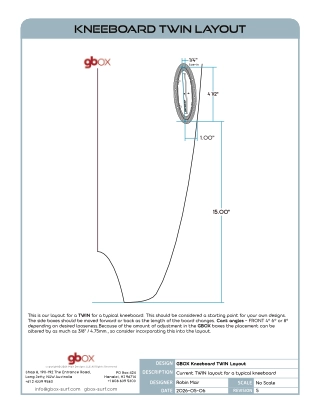
At best, this is more art than science, but well worth experimenting with!
The beauty of an adjustable fin system is that you can go out and experiment for yourself to verify what effect a change in fin placement can have on a board's overall performance. This primer will use some terminology best explained upfront so that we all speak the same language.
Terminology
fin triangle or cluster
this is the grouping of the fins, whether a thruster, quad, or 2PLUS1; it refers to the entire fin layout
fin setup
this is the position of the entire fin cluster as a unit, either all forward, all back, spread apart, grouped, etc.
cant angle
also referred to as fin angle, it is the amount by which the side fins are leaning out from the centerline of the surfboard, bottom-up
toe-in
this is the amount that the front of the fin boxes are pointed in (toed in) from the centerline of the box towards the stringer
fore 'n' aft
this is the position of the fin in the box forward or backward along the length of the board
spread fin cluster
this is where all the fins in the cluster are spread as far apart as possible, and side fins all the way forward and center fin back. This generally makes the board stiffer. The fins are spread as far apart as the box adjustment will allow for quads
tight fin cluster
the opposite of the spread fin cluster, typically side fins back and center fin all the way forward, makes the board looser and more pivotal. For quads, the fins are pushed as close together as the box adjustments allow, with front fins back and back fins all the way forward
thruster setup
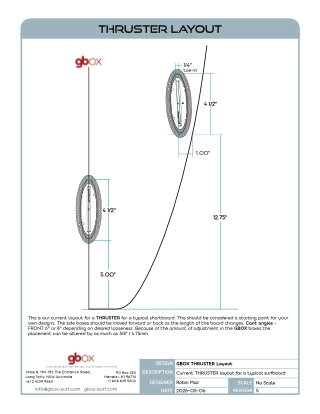
a thruster setup consists of side fins and a center fin, with the most common setup featuring fins all the same height
quad setup
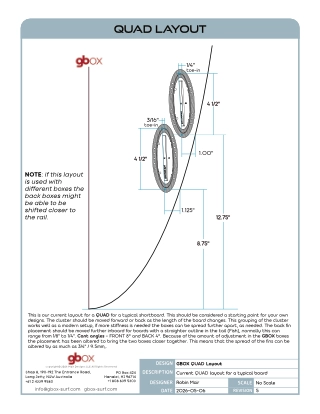
a quad setup consists of two sets of side fins, with the most common setup featuring a larger set of fins in front of a smaller set. The placement of these two sets relative to each other can vary widely, but our preference is for them to be close together
Reverse quad setup
a reverse quad setup consists of two sets of side fins, with smaller fins in front of a larger set. The placement of these two sets relative to each other can vary widely, but our preference is for them to be close together. This is a term we coined to describe this setup arrangement
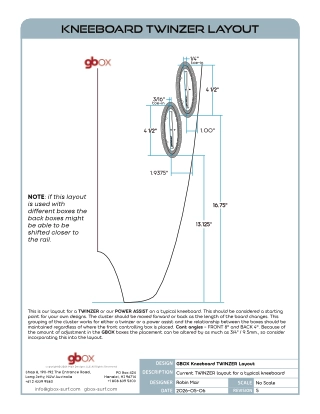
Twinzer setup
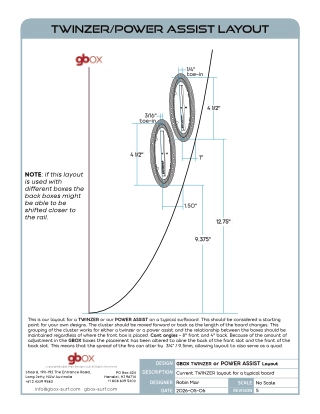
a twinzer setup consists of two sets of side fins, with small canard-style fins in front of a much larger set. The placement of these two sets relative to each other is typically very tight to allow the canard fin to serve as a transition fin to the larger fin. In addition, the canard fins typically have additional cant built into the base to have more cant than the boxes usually provide
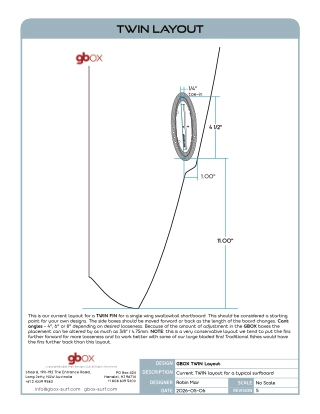
Twin fin setup
a twin fin setup consists of two side fins. Typically, larger fins are used in these setups to provide adequate drive
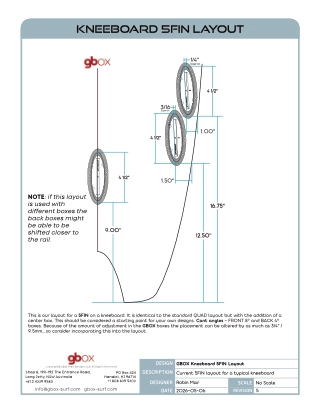
5FIN setup
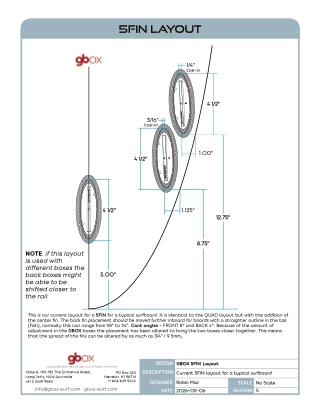
a 5FIN setup is simply a quad setup with the addition of a center box, and this allows the board to be ridden as either a quad or a thruster or with all five fins
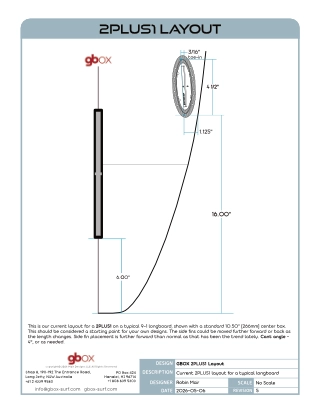
2PLUS1 setup
a 2PLUS1 setup consists of side fins and a much larger center fin, most commonly placed in a regular longboard center box. The side fins are typically small in relationship to the size of the center fin, but the heights can vary
Fin Setup Traits
spread fin cluster
TRAIT
longer turning arc, more common on longer boards or guns
CONDITIONS
larger, faster waves, situations where a gun would more likely be used
tight fin cluster
TRAIT
shorter turning arc, the typical setup for smaller thrusters
CONDITIONS
wide range, depending on skill and the board's shape
fin cluster forward
TRAIT
looser, shortest arc, less hold
CONDITIONS
pivotal surfing on small to medium waves
fin cluster normal
TRAIT
loose with control, typically the position designed by the shaper
CONDITIONS
versatile wide range of conditions
fin cluster back
TRAIT
more control, more projection, bigger tube/pocket waves
CONDITIONS
once again typical for situations where a gun would be used
more fin cant
TRAIT
looser with less drive, requires more turning to generate speed
CONDITIONS
small to medium surf
less fin cant
TRAIT
stiffer with more drive, bigger, faster hollow surf
CONDITIONS
commonly used in twin fins, guns, or tow-in boards
The above is just a tiny sampling of the more apparent combinations. There are many more in between or with subtle variations. The intent is to provide a little insight into the more general characteristics of fin placement.
The position and cant of the fins are critical and significantly affect a surfboard's performance. The slightest change can sometimes dramatically affect the board, but it is not a magic bullet. Sometimes, the opposite effect can occur. Fin setup is just one piece in a complex dynamic system of shapes and curves that make up a surfboard.
Each board is different, as is each surfer, so any changes could have various results depending on the board and the surfer!
The information provided above applies to a 2+1 fin setup, except that the size of the center fin has a more heavily weighted effect on the cluster. The smaller the center fin, the more it will perform like a thruster. Therefore, the placement of the center fin will be the most controlling aspect of the setup's performance.
Of course, other factors can affect fin setup, including the size and shape of the fin, its foiling, and whether all the fins in the cluster are the same. However, we believe the beauty of an adjustable system is that it allows the surfer to experiment to determine what works for them and helps them learn the significance of being able to adjust the fin setup on a surfboard.
Our system was designed with built-in adjustability, making hands-on experimentation with fin adjustment easier.
Illustrated Terms
The renderings in this section show illustrations for some of the terms used in the fin setup discussion. Hopefully, these will provide a visual guide to some of the terminologies.
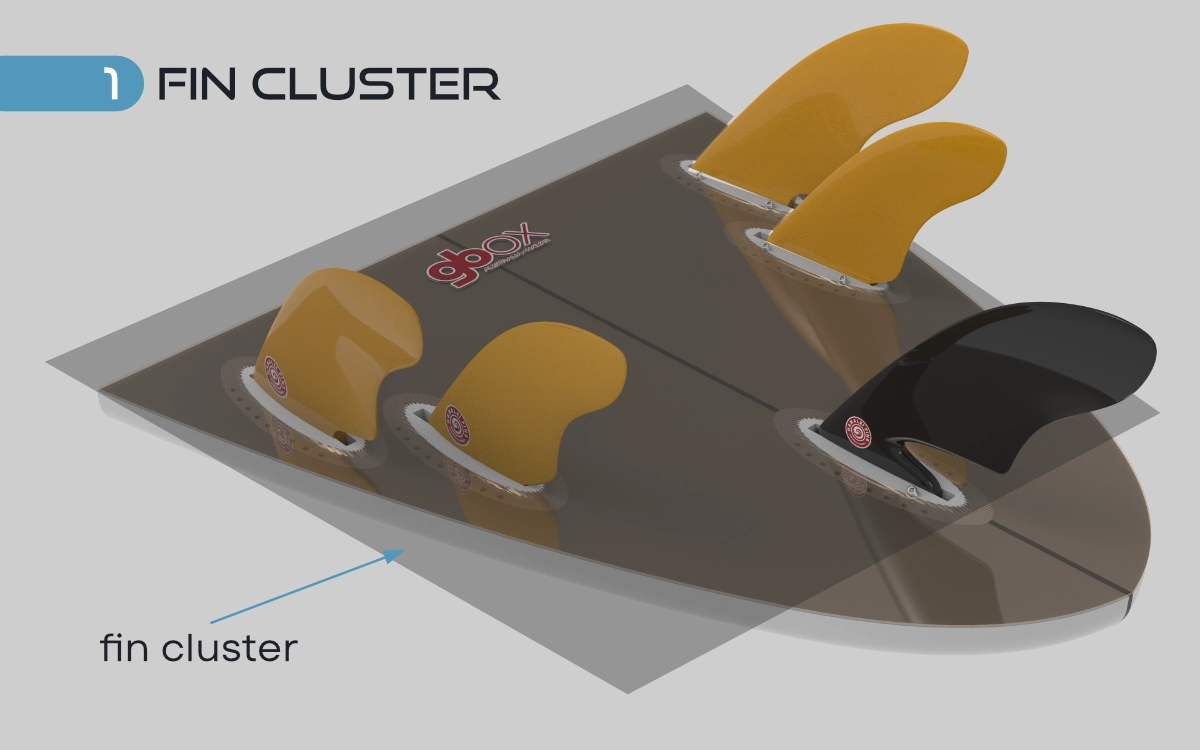
FIN CLUSTER
Shows what is referred to as a fin cluster, the combination of all the fins in the layout.
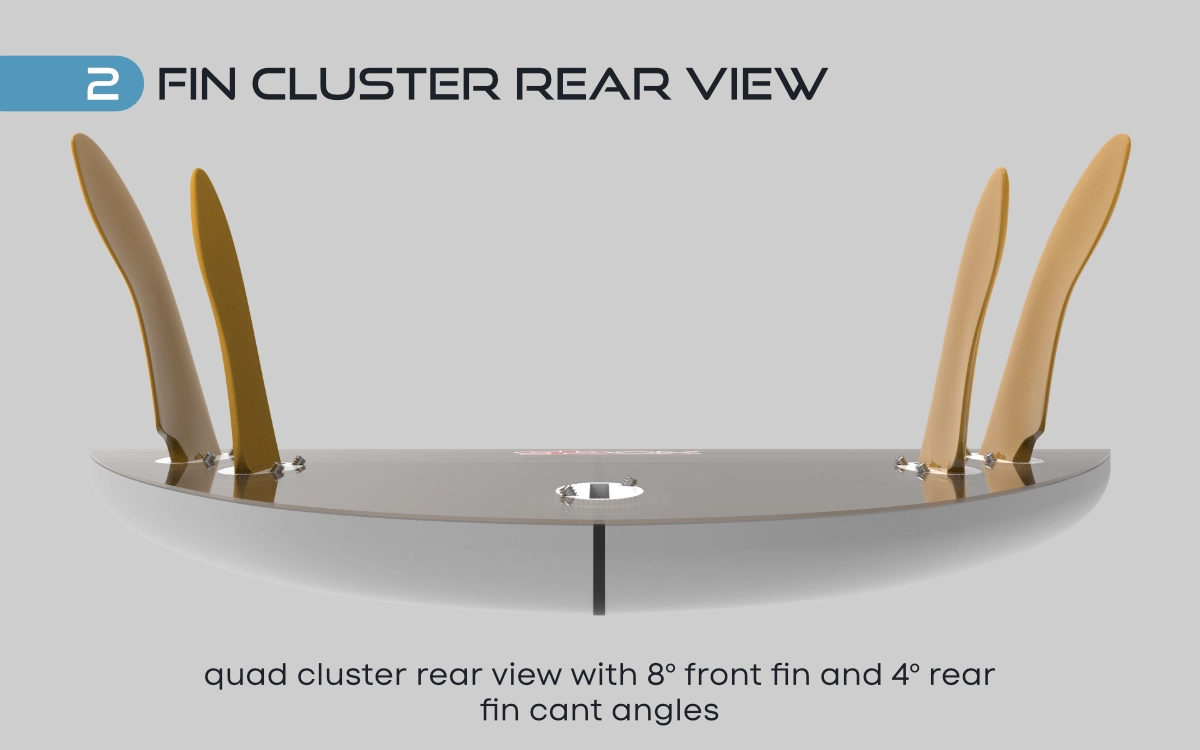
CLUSTER REAR VIEW
Another view of the fin cluster from the rear of the board shows the cant angles of the fins in the cluster. This is the most common view used to refer to the left and right fins when talking about fins.
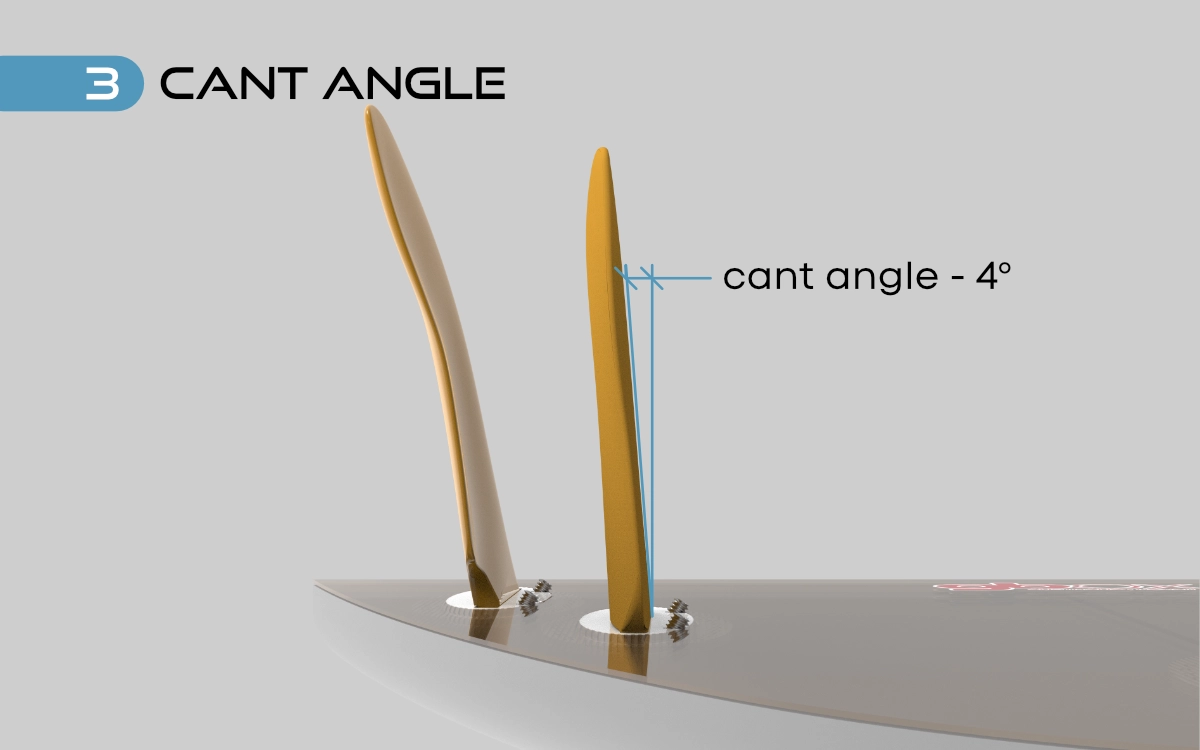
CANT ANGLE
Shows how the cant angle is measured. The cant angle is built into the box with the GB24 fin system. The correct cant angle needs to be selected before installation.
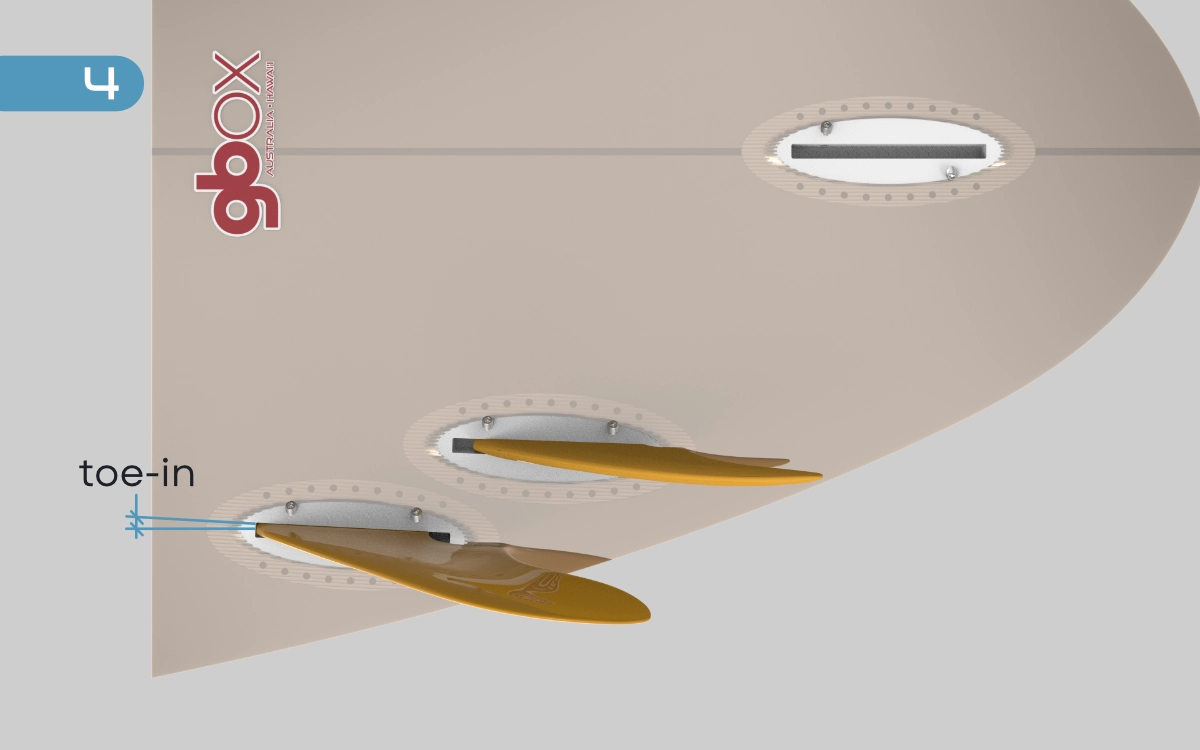
TOE-IN
The toe-in of the boxes is another critical value, shown in this drawing. This is the distance the boxes are pointed towards the stringer from the box centerline. This can vary from the front to the back fins in quad setups.
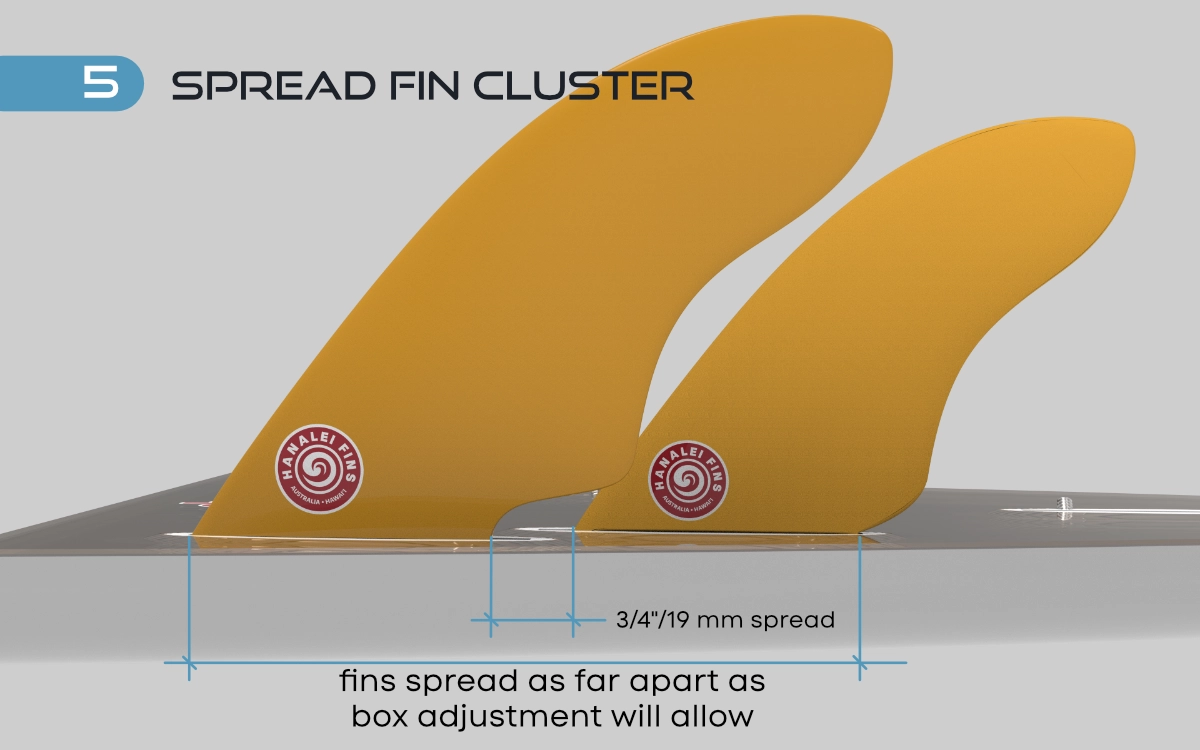
SPREAD FIN CLUSTER
A spread fin cluster is where the fins are spread as far apart as possible. For a thruster, the side fins are as far forward as possible, and the center fin is as far back as possible. For quads, the front fins are as far forward as possible, and the back fins are as far back as possible.
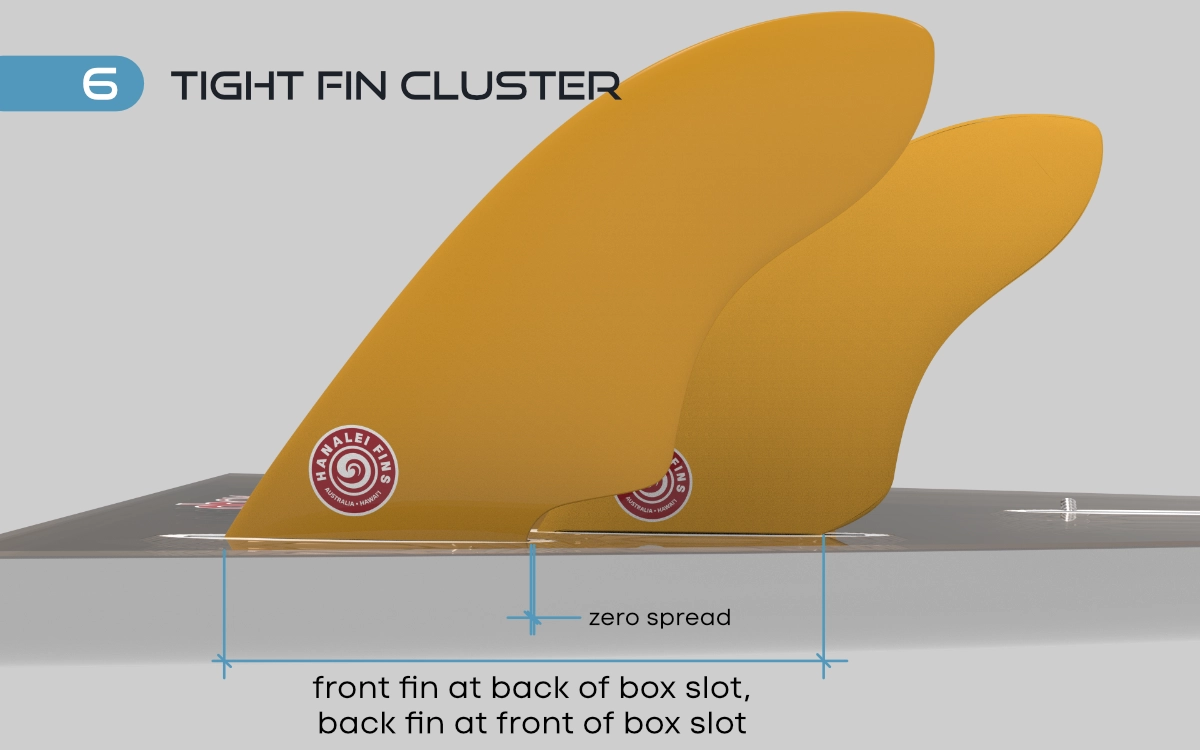
TIGHT FIN CLUSTER
A tight fin cluster is where the fins are pushed as close together as possible. For a thruster, the side fins are as far back as possible and the center fin as far forward as possible. For quads, the front fins are as far back as possible, and the back fins are as far forward as possible.
Fin Primer